


Resident Evil Requiem is a sleek, confident return to classic survival-horror tension – then it turns around, hands you Leon’s firepower, and dares you to call it “old-school” with a straight face.
Resident Evil has always been my kind of horror: the kind where the door handle is scarier than the monster behind it, and ammo feels like a sacred currency. Requiem sharpens that classic tension, modernizes the feel, and flips the mood just enough to keep you on edge from start to finish.
A goblin, a flashlight, and a very bad idea
I went into Requiem expecting the usual Resident Evil bargain: I get a gorgeous nightmare, Capcom gets my sleep schedule. Fair trade. What surprised me is how deliberately this game tries to satisfy two different cravings at once – the craving for slow, careful survival horror where every bullet feels like a family heirloom, and the craving for that confident, kinetic Resident action rhythm where you’re not just surviving the mess… you’re cleaning it up.
The result is a game that feels unusually “complete.” Not in the bloated modern way where “complete” means “also please do 63 side activities,” but in the tight, curated way where almost every location, encounter, and backtrack has a reason to exist. Requiem wants to scare you, reward you, and keep you moving. Mostly, it succeeds.
Two protagonists, two flavors, one campaign that actually makes sense
Requiem’s smartest structural choice is also the simplest: it’s built around two leads who represent two sides of Resident Evil’s modern identity. Grace Ashcroft, an FBI analyst pulled into a situation that immediately escalates past the point of “this should be above my pay grade,” carries the survival-horror DNA. Her sections lean into vulnerability, claustrophobia, and the creeping dread of being under-equipped in a place that very much wants you dead.

Then there’s Leon S. Kennedy, the series veteran who walks into danger like it’s a familiar hallway. His sections bring that sharper, more combat-forward pace where the game’s systems let you feel competent, even when the world is falling apart. The difference isn’t just character flavor – it’s how the game frames fear itself. With Grace, fear is the atmosphere. With Leon, fear becomes a tool the game uses in bursts, because your power level shifts the equation.
What makes this approach work is that the campaign doesn’t feel like two separate games awkwardly stapled together. Instead, it uses contrast as pacing. Grace tightens your nerves and makes you second-guess every door. Leon gives you breathing room and momentum. Then Requiem swaps the roles again so your confidence never gets too comfortable. It’s a clever rhythm: tension, release, tension again – like Capcom is playing the world’s meanest lullaby.
The horror craft: not just jump scares, but pressure
The best horror in Requiem isn’t the sudden loud noise. It’s the pressure – the kind that builds quietly while you’re doing mundane survival-horror math. How many bullets do I have? Do I heal now or risk it? If I use this key item, do I lose inventory space for something more important? If I save now, will I regret it later?
Requiem understands that fear isn’t only “monster design.” It’s also the feeling of being underprepared while the environment keeps whispering, “You missed something.” That’s why the early hours – especially in Grace’s storyline – hit so hard. You’re not sprinting through a power fantasy. You’re inching forward through uncertainty, learning what the game expects of you, and trying not to waste resources while you do it.
Sound design does a lot of heavy lifting here. It’s the kind of audio mix that makes you pause in hallways because you can’t tell whether you’re hearing your own footsteps or something pacing you from the other side of the wall. When a Resident Evil game is on form, it makes silence feel suspicious. Requiem absolutely nails that trick.

Classic structure is back, and it feels good
If you’ve missed that classic Resident sensation of inhabiting a space – learning it, unlocking it, mastering it – Requiem is happy to feed you. This is a game that wants you to care about maps, locked doors, and returning to earlier areas with new tools and new knowledge. The backtracking isn’t a chore; it’s part of the pleasure. It creates a feeling of ownership over the location: first you fear the building, then you understand it, then you dominate it.
That structure also gives the game a satisfying momentum curve. Early on, every locked door feels like a wall. Later, those same doors become rewards – proof you’ve earned progress the “classic” way rather than being pulled forward by cutscenes. It’s one of the reasons Requiem feels more traditional than some recent entries, even when it’s doing modern cinematic set pieces.
And yes, the series history is present. Certain places and themes carry weight precisely because Resident Evil has taught players to care about them. Requiem uses that history effectively… most of the time.
Combat: elegant survival on one side, crisp action on the other
Requiem’s combat is tuned with intention. Grace’s sections emphasize survival: fewer options, more compromise, more moments where the best decision is not to fight. It’s combat as risk management. You win by staying alive and staying smart, not by proving you can delete every enemy in the room.
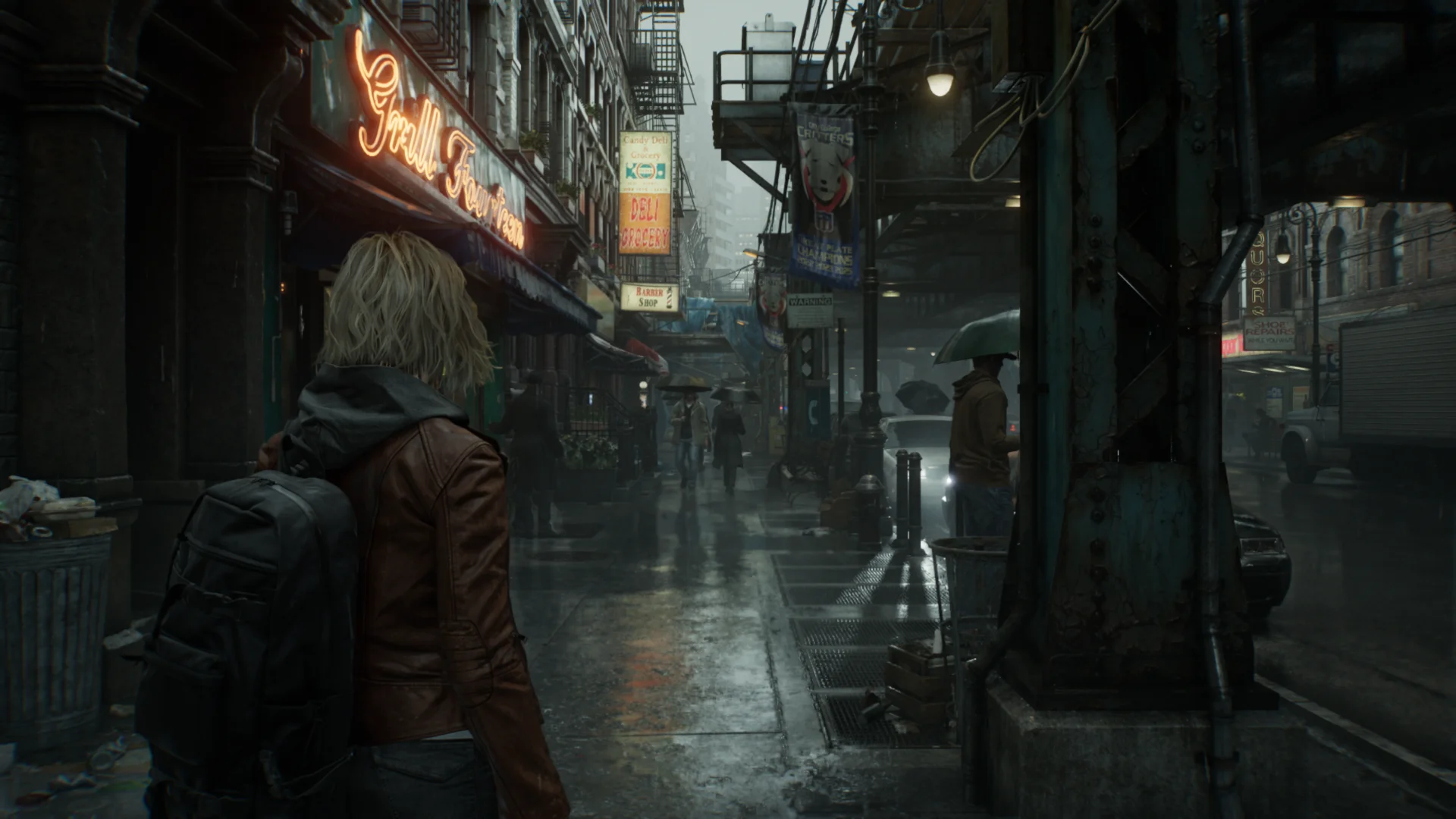
Leon’s sections flip the switch. Here the combat gets that satisfying modern Resident snap – clean feedback, punchy weapon feel, and a flow that rewards control rather than chaos. The difference is important: Leon doesn’t just hit harder. He changes how you read a space. Corridors feel less like traps and more like arenas. Encounters become something you can solve with positioning and timing, not just prayer.
This duality keeps the game fresh, but it also creates a subtle challenge: the game has to maintain horror even when it gives you power. Requiem usually handles this by making sure you never feel truly invincible. You might be better equipped as Leon, but the world still punishes sloppy play. It’s not “press button to win.” It’s “press button, but aim like you mean it.”
The pacing: tight enough to respect you, dense enough to reward you
A lot of modern games confuse “long” with “valuable.” Requiem doesn’t. It’s designed like a good horror movie: it gets in, builds tension, pays it off, and doesn’t overstay its welcome. Depending on how you play – how thorough you are, how often you explore, how much you die, what difficulty you choose – your runtime will vary. But the key point is that the campaign feels deliberate, not padded.
There’s an important side effect of this: Requiem encourages replay. When a game respects your time, you’re more willing to come back. You’ll want to try a harder difficulty, chase better performance, or simply revisit your favorite segments. That’s a very “Resident Evil” kind of longevity: replayability built on mastery, not on endless content sprawl.
Puzzles: functional, sometimes too polite
Here’s where the “classic” promise doesn’t fully cash out. Requiem has puzzles – no question – but it often plays them safe. You’ll get the expected Resident rhythm of codes, keys, and item interactions, but the puzzle design rarely becomes the kind of brainy highlight that makes you feel like you’ve outsmarted the nightmare.
This isn’t a deal-breaker, because the exploration loop is strong and the moment-to-moment tension stays high. But if you come into Requiem hoping for a puzzle showcase – those layered, satisfying problem chains that define the most beloved classic entries – you might find yourself wishing Capcom pushed harder. The puzzles are fine. They’re just not the star.

Story and nostalgia: mostly confident, occasionally a little too eager
Requiem’s story does what Resident Evil stories should do: it moves fast, it gets weird, and it knows when to be serious and when to embrace the franchise’s slightly ridiculous charm. The new perspective through Grace helps ground the horror early, while Leon provides continuity and veteran weight.
Where it gets tricky is how nostalgia is used. When it’s measured, it’s excellent – old echoes recontextualized through new horror, familiar ideas sharpened by better craft. But there are moments where the game feels like it wants you to clap for recognition rather than fear what’s in the next room. If you’re a long-time fan, you’ll probably enjoy those beats. If you’re more sensitive to fanservice, you may feel the horror tension soften in places where it should stay sharp.
The best sections of Requiem feel like Capcom using its history as a weapon. The weaker moments feel like history being used as a trophy.
So… is it the best Resident Evil ever?
Not quite. And it doesn’t need to be.
Requiem is one of those rare sequels that understands the core of what people love about the series – and then makes smart choices to deliver that love without feeling trapped by it. It’s classic in structure and mood, modern in feel and presentation, and bold enough to embrace Resident Evil’s split personality instead of pretending the franchise is only one thing.
If you want pure survival horror, Grace’s segments are the meal. If you want that confident action-horror rush, Leon delivers the dessert with a shotgun garnish. If you want both – and you want them woven into a single campaign that respects your time – Requiem is an easy recommendation.
Final verdict from the cave
Resident Evil Requiem is the kind of horror I crave most: the kind that makes you tense up in silence, then rewards you for surviving with a moment of relief and a tiny, greedy sense of victory. It’s scary without being cheap, stylish without being hollow, and paced like a developer who understands that fear is strongest when it doesn’t drag.
In other words: Capcom cooked.
And me? I’m going back into the cave, turning off the lights, and pretending I didn’t hear that sound behind the wall.
GobGeek score: 8.5/10 / Cave Approved


